SNAP shutdown putting 143,000 Rhode Islanders at risk | Opinion
Originally published in The Providence Journal, 10/30/2025
Do you have enough food for the week? How about just today?
Too many Rhode Islanders are waking up unsure of the answer.
As of Nov. 1, nearly 143,000 Rhode Islanders – and 42 million people nationwide – have lost access to the Supplemental Nutrition Assistance Program, or SNAP, due to the ongoing government shutdown. To put that number in context, 143,000 people is more than the populations of Cranston, Coventry, and Charlestown – combined.
These are your friends and neighbors, family members and coworkers, many of whom work full time, to make ends meet at a moment when the cost of living is increasingly untenable. Housing prices have skyrocketed and so have food costs, medication, and utilities.
Despite these rising costs, the average SNAP benefit is only $6 per day – that’s $42 for an entire week. SNAP helps put healthy food on the table for people like me. I was a college student in North Dakota when I turned to SNAP. It got me through a tough time, fueling my ability to pursue my education and a more stable future.
I say this from experience: $6 a day isn’t much – but it’s something. Today, there is nothing. And there is no relief in sight as the federal shutdown continues.
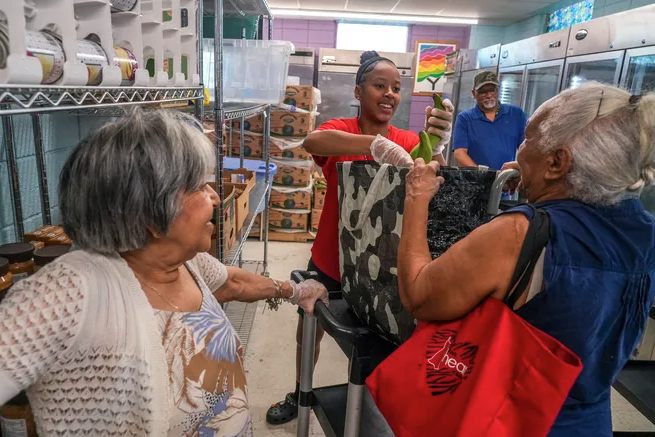
The Rhode Island Community Food Bank and the pantries we support respond to people in crisis every day, but this crisis is too big for us to tackle alone. There are 137 food pantries and meal sites in the Food Bank’s member network. Consistently, they tell us that the need is greater than ever. From Woonsocket to Westerly, more people, new faces, more families are on the brink. They also share that rising food costs are depleting their pantry shelves and negatively impacting food donations. These food pantries, deeply embedded in and trusted by our communities, were already feeling the pinch. Without SNAP, that pressure continues to build.
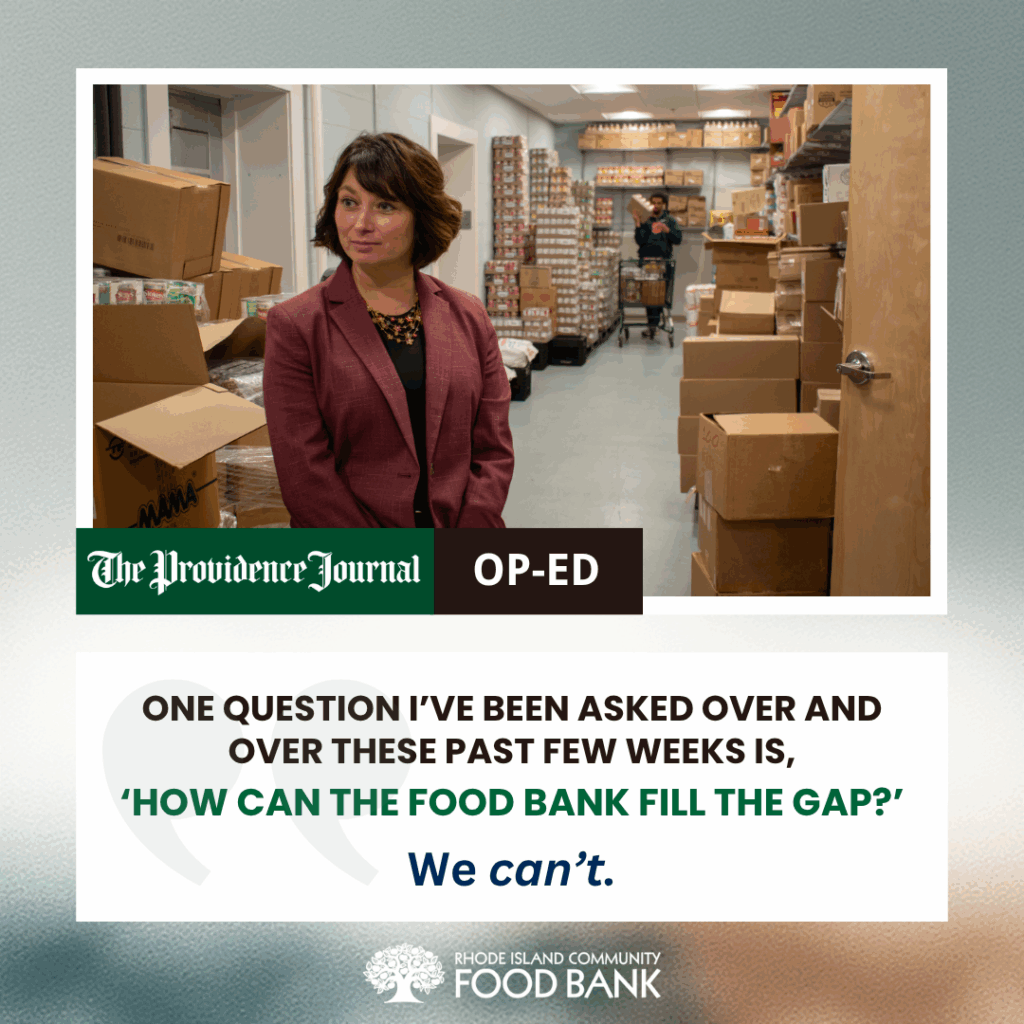
One question I’ve been asked over and over these past few weeks is, “how can the Food Bank fill the gap?”
We can’t.
That is the simple answer. We do not have enough funds or food to meet the $29 million loss facing Rhode Island right now. If the shutdown lingers into December, that’s another $29 million, and another month of empty cupboards.
So, what can we do? What can you do?
- Give a financial gift to the Rhode Island Community Food Bank. Buying food in bulk drives down prices, giving us unmatched purchasing power. What you give to the Food Bank ultimately serves all 137 member agencies and every city and town statewide.
- Donate food to your local food pantry. Pick up an extra bag on your grocery trip or organize a food drive at school or work. We will make sure your contributions, of any size, find their way to the people who need them most.
- Use your voice. Spread the word about the crisis we are facing and help people in need to connect with every available resource.
Eating well on $6 a day is difficult, but things have gone from difficult to dire.
Today, 143,000 Rhode Islanders are facing significant fear and uncertainty. Let’s show them that they aren’t alone. Let’s step up, individually and collectively, and do everything we can to make sure no one goes hungry. If any state can end hunger – it’s Rhode Island. Now is our time to prove it.
Melissa Cherney is the CEO of the Rhode Island Community Food Bank. You can find resources through the Food Bank, including your local pantry, at www.RIFoodBank.org/shutdown.
Read the original op-ed in The Providence Journal here.
Founded in 1982 and headquartered in Providence, RI, the Rhode Island Community Food Bank (“the Food Bank” or “RI Food Bank”) serves as the central hub for food distribution across its state-wide network of 137 member agencies/food pantries, ensuring that nutritious food reaches those who need it most. Through donations, federal programs, and community partnerships, the Food Bank works to improve the quality of life for all Rhode Islanders by advancing solutions to the problem of hunger.
The RI Food Bank is a 501(c)(3) non-profit organization. Your donation is tax-deductible as allowed by law.
Rhode Island Community Food Bank │ 200 Niantic Avenue, Providence RI 02907 │ (401) 942-6325 (main) │ rifoodbank.org