A Conversation with Melissa Cherney of the Rhode Island Community Food Bank
by Genie McPherson Trevor
Originally published in Edible Rhody, September 21, 2026
One Year into the Job, the CEO Rejects on Hunger, Hope and the Work Ahead
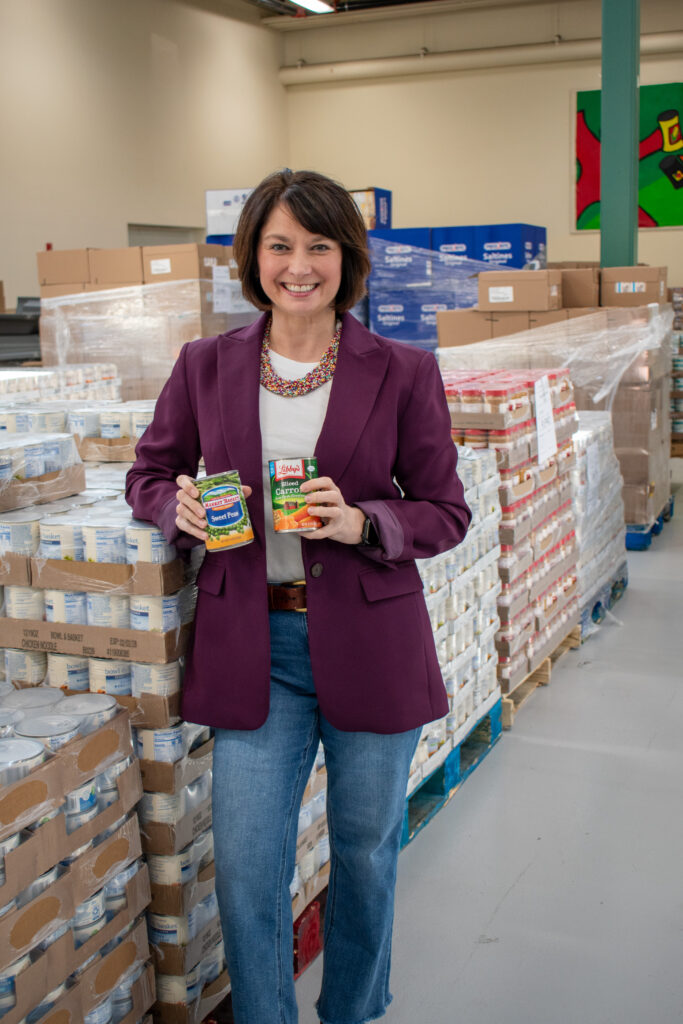
When Melissa Cherney arrived in Rhode Island to lead the Rhode Island Community Food Bank, she stepped into the role during a particularly tricky period. Following her move from the Great Plains Food Bank in North Dakota, Cherney handled a demanding first year with skill and resolve, all while navigating the effects of reduced federal Supplemental Nutrition Assistance Program (SNAP) benefits, a growing demand for food assistance and the enormous complexities of meeting the need. Edible Rhody recently sat down with Cherney to learn about the challenges, the surprises and the opportunities she sees ahead for the Food Bank and the Rhode Islanders it serves.
You’ve just completed your first year as CEO of the Rhode Island Community Food Bank (RICFB). Looking back, what has been your biggest hurdle? And what accomplishment are you most proud of?
I can’t believe it’s already been a year! I’ve been in hunger relief for 20 years, but the past year has been perhaps the most challenging ever—not just for me but for all of us in the sector. The SNAP crisis last November was unprecedented. Combined with already record high need, significant affordability challenges and ongoing policy changes, there’s been a lot of instability to navigate. I’m incredibly proud of how we responded to this moment. Our team, member agencies, community partners and government leaders all came together to collaborate and help our neighbors.
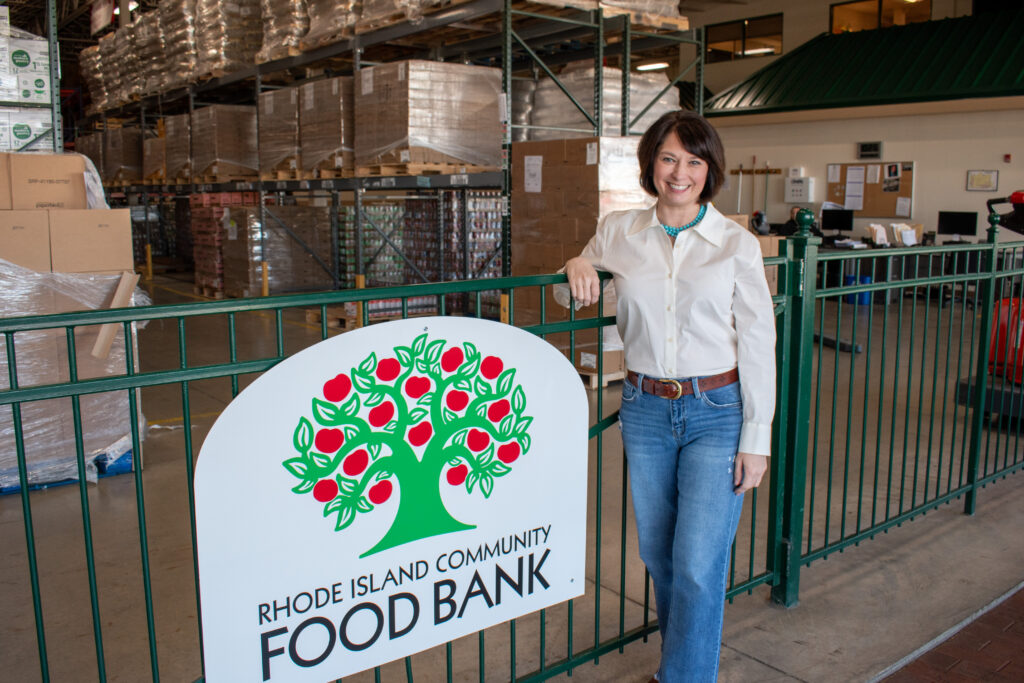
The Food Bank and our network of 137 member agencies are the safety net for the safety net.
It’s been nearly a year since significant reductions were made to federal SNAP benefits. What has it revealed about the ongoing need for food assistance?
The Food Bank and our network of 137 member agencies are the safety net for the safety net. Families have always turned to us when their SNAP benefits ran out and they couldn’t make ends meet. SNAP cuts and changes put additional pressure on an already-strained system. Hunger is at an all-time high, and I worry we haven’t seen the worst of it yet. The need is real and it’s deeper and more persistent than ever.
Many people confuse the work of RICFB with that of local food pantries. Can you explain the role the Food Bank plays in addressing hunger across the state?
Think of the Food Bank as the warehouse and distribution center for the state’s hunger relief network. We source food through donations, government commodities and purchases, then distribute it in bulk to food pantries and meal programs. Those organizations are on the front lines, providing food directly to neighbors experiencing hunger. Last year, we distributed 18.6 million pounds of food that helped feed more than 90,000 Rhode Islanders each month. By purchasing and distributing food at scale, we maximize every dollar and ensure our partners have the resources they need to serve their communities.
RICFB received an incredibly generous surprise donation from Taylor Swift and Travis Kelce ahead of their wedding. What was your team’s reaction when you learned about it, and how will those funds be used?
We were shocked! It was a completely unexpected gift, and we were so incredibly excited and grateful. Their $1 million donation went directly to purchasing food to feed Rhode Islanders. We can buy about one pound of food for every $1 we spend—so that’s 1 million pounds of safe, nutritious, culturally responsive food. I have this mantra, “We all do better when we all do better.” So, this gift will supply food to all our member agencies and ultimately help those we collectively serve.
Food insecurity isn’t always visible. What would you like people to understand about hunger and food insecurity in Rhode Island today?
You’re absolutely right—hunger hides in plain sight. I grew up on a farm in North Dakota, and we were so proud to grow food that fed the world. But it wasn’t an easy living. I was a free-lunch kid. There were nights when we ate at my grandparents’ because there wasn’t enough at home. In college, I used SNAP benefits for a few months to help fill the gap when I couldn’t pay for everything. It’s important to know that hunger is a circumstance, not a personal characteristic. It doesn’t define you; it’s just a small part of your story.
We have an incredible local food community—from farmers and fishers to chefs, restaurateurs and food producers. How does RICFB partner with that community, and where do you see opportunities to strengthen those relationships?
The Food Bank is now purchasing about 40% of our food, and it’s important to me that we invest those dollars wisely. As a farm girl, I have a passion for supporting our food producers. We work hard to source as much local food as possible, which is a win for us, for the food community, and for the families receiving delicious food. I believe there is so much opportunity to continue growing and strengthening our commitment to local foods.
We’re in an election year. What would you most like any new incoming leaders to understand about food insecurity in Rhode Island, and what policies would make the greatest difference?
Hunger intersects with nearly every aspect of our community’s well-being. When a child is hungry, learning suffers. When someone lacks adequate nutrition, their health, productivity and quality of life are affected. Investing in hunger relief is an investment in health, education, workforce and the economy. Food is the most basic human need. Without it people and communities can’t thrive. We need policies that address today’s immediate needs while also tackling the root causes of food insecurity to build a stronger, healthier and more resilient Rhode Island.
For readers who want to help but aren’t sure where to begin, what are some of the most meaningful ways to support RICFB?
ADVOCATE for smart policy and vote for candidates who demonstrate a commitment to hunger relief. CONNECT with us and stay informed through social media and our newsletter. DONATE FOOD to your local pantry, where there is always a need and DONATE FUNDS to the Food Bank, where we will stretch your generous donations to maximize statewide impact.
As you enter your second year as CEO, what are your greatest hopes for the year ahead?
Every year, I hope we get closer to ending hunger because hunger is solvable. There is enough food produced in this country to feed everyone, yet not everyone can afford it or has access to it. That’s a travesty. I think if any state can end hunger, it’s Rhode Island, in part because of its geographic footprint, but also because of its people. With so much uncertainty and divisiveness in the world right now, I’m still hopeful that we as a community and state can come together united in our efforts and make a difference. But it will take all of us working together.
Edible Rhody Publisher/Editor Genie McPherson Trevor proudly serves on the Board of Directors of the Rhode Island Community Food Bank.
Founded in 1982, the Rhode Island Community Food Bank is a 501(c)(3) nonprofit organization that works to improve the quality of life for all Rhode Islanders by advancing solutions to the problem of hunger. The Food Bank serves as the central food distribution hub across a statewide network of 140 member agencies. Through donations, federal programs, and community partnerships, in 2026, the Food Bank distributed over 18.2 million pounds of food, 4.7 million pounds of which was fresh produce. The RI Community Food Bank is a member of Feeding America, the nation’s largest domestic hunger-relief organization.
The RI Food Bank is a 501(c)(3) non-profit organization. Your donation is tax-deductible as allowed by law.
Rhode Island Community Food Bank │ 200 Niantic Avenue, Providence RI 02907 │ (401) 942-6325 (main) │ rifoodbank.org